
By Mike Haskins
There are actors who arrive like lightning. And there are those who echo like thunder.
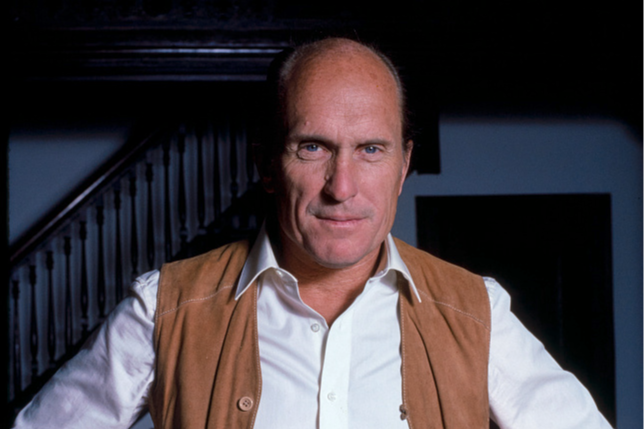
Last month at the age of 95, we lost Robert Duvall. But his thunder will reverberate through the ages.
In the revolution that reshaped American acting in the middle of the twentieth century, the names are familiar and formidable. Marlon Brando. Al Pacino. Robert De Niro. Dustin Hoffman. They expanded the emotional vocabulary of the screen. They broke old forms and made something raw and modern.
Standing as tall as any was Robert Duvall.
Brando was larger than life. Duvall was life size. That was not a limitation. It was his advantage.
He did not arrive with matinee idol looks or theatrical mystique. He looked like a man you might see at the feed store, at a high school football game, behind the wheel of a pickup. And yet from that ordinariness he could construct almost anyone.
He began silently as Boo Radley in To Kill a Mockingbird. As a heretofore unseen good. A decade later he was Tom Hagen in The Godfather and The Godfather Part II, composed, intelligent, morally alert in a room full of wolves. He did not overplay the consigliere. He let stillness do the work.
Then came the ferocity of Lt. Col. Kilgore in Apocalypse Now. That performance has become cultural shorthand, quoted and imitated, but look again and you see control beneath the bravado. Kilgore is not a cartoon. He is terrifying precisely because he believes himself to be practical.
Duvall could tilt toward charm as easily as menace. As Max Mercy in The Natural, he was slick, insinuating, the embodiment of opportunistic sports mythmaking. In The Great Santini he created Bull Meechum, one of the most complicated fathers ever put on film, a Marine pilot whose authority at home masks insecurity and fear. It is a towering performance, filled with bluster and fragility in equal measure. It remains a mystery to me why so many have never watched this film and performance. If you’re one, please prioritize it.
He won the Academy Award for Mac Sledge in Tender Mercies. There are no grand speeches in that role. No courtroom monologues. No explosions. Just a man in a small Texas town trying to put one sober day in front of another. The achievement lies in restraint. Mac does not announce redemption. He inches toward it.
Decades later, in Secondhand Lions, he played Hub McCann, an aging uncle who may or may not have lived an epic life of adventure. Duvall gave the character both twinkle and gravity. He allowed Hub’s tall tales to feel half true and wholly heartfelt. The performance works because he never winks at the audience. He commits.
And then there are the Westerns, the genre where his particular blend of authority and ease found its fullest expression, on horseback.
His defining role for many remains Augustus McCrae in Lonesome Dove. Gus is talkative, playful, romantic, stubborn, occasionally reckless. He loves women, horses, good whiskey, and the open range. He is capable of great loyalty and surprising tenderness. In lesser hands he might have become caricature. In Duvall’s hands he becomes a man you feel you have ridden beside.
What makes the performance extraordinary is its balance. Gus is brave but not posturing. Witty but not flippant. Melancholy without self-pity. Duvall never pushes the sentiment. He trusts the character and the material. By the end of the miniseries, viewers do not feel they have watched a performance. They feel they have lost a friend.
That ability to disappear inside vastly different men is what sets Duvall apart. He could be a ruthless power broker, a haunted veteran, a failed husband, a preacher, a rancher, a judge. He was equally convincing as a lead or as the man who steadies the frame from the side. Some actors demand the camera. Duvall met it eye to eye.
He was strong without theatrics.
There was muscle in his work, but not display. He did not inflate emotion for effect. He trusted small gestures, a shift in tone, a pause before a line. Directors relied on him because he brought weight. Audiences trusted him because he felt true.
And he was prolific in a way that now feels almost old-fashioned. Decade after decade he kept showing up in films that mattered, in stories that ranged from intimate dramas to sprawling epics. He did not chase trends. He did not reinvent himself with fanfare. He simply worked at a level that most actors never reach and few sustain. He was nominated for Oscars seven times over four decades, the last coming when he was 83.
We who grew up watching these films in theaters, not on streaming platforms, have his performances stitched into memory. The first time we heard Kilgore speak of surfing in a war zone. The tension at the Corleone table. The ache in Mac Sledge’s silence. The cold shark in a suit, void of morality, Frank Hackett in Network.
They do not make many actors like him anymore. In fact, they may not have made another at all.
One of one.
Not because he was flashy. Not because he cultivated mystique. But because he combined range, discipline, intelligence, and humility in proportions that are almost impossible to replicate. He could command a room without raising his voice. He could break your heart without asking you to notice.
In an era crowded with giants, he stood at the same height without insisting upon it.
If you revisit only one performance, make it Lonesome Dove. Watch Duvall as Augustus McCrae ride, flirt, argue, mourn, and endure. Notice how alive he makes every moment feel. Notice how easily he holds humor and gravity in the same breath.
Robert Duvall. Mischief and authority. Warmth and steel. Indeed, “It’s been quite a party.”
They truly never made them like him.
And they likely never will again.
Click here to read this month’s issue or explore the Senior Voice Archives!
