
By Mike Haskins
This year marks Colorado’s 150th birthday as a state. As we look at her now, the beauty is unfaded. The blue in her sky colored eyes is as clear and bright as ever. Her height, fourteen thousand feet and more, remains undiminished. There is no stoop in her elegant posture.
Colorado is an idea every bit as much as it is a place.
I came to Colorado to live five and a half years ago. Yes, I am a newcomer. Perhaps I see Colorado as a beauty because I changed the course of my life to be here, leaving friends, family, and all things familiar behind. I came for an adventure of the heart. And while I may be new, I think I share something with the people who have been coming here since the very beginning.
Long before it was called Colorado, this land was home to the Ute, Arapaho, Cheyenne, Apache, and Comanche peoples, who lived, hunted, traded, and traveled across what would later be named the High Plains, the Front Range, and the Rockies. Their societies, cultures, and traditions are not a footnote to Colorado’s story. They are woven permanently into its fabric and color.
It is not a story of happiness, fairness, or equity. But it is an American story, and it is as complicated and nuanced as the names that fill its history.
Names like Kit Carson.
Carson knew this land deeply, and he knew its people. That knowledge made him valuable, and it also made him complicit in a future that would cost Indigenous communities their home. He spoke several Native languages and married Native women. At times, he respected Native cultures and advocated for peace. He was also a soldier who participated in campaigns that forcibly removed Native peoples, particularly the Navajo during the Long Walk.
Carson mattered in the transition from wilderness to territory, as exploration gave way to settlement. He was a man of his time, caught between loyalties, survival, and orders. Like most real history, his story resists simplicity.
Chief Ouray was a leader of the Ute people, whose homeland covered much of western and central Colorado. Long before Colorado became a state, it was already home. Ouray and his wife, Chipeta, led their people during a time when the land was being renamed, divided, and claimed at extraordinary speed. Ouray negotiated not because he believed the promises he was offered, but because he understood the alternative. Chipeta stood beside him with clarity and dignity, advocating for her people long after treaties failed them. Their story reminds us that Colorado’s becoming was not only ambitious. It was costly.
Perhaps the most obvious turning point came in 1858.
Green Russell had been a Forty Niner in California’s gold rush. He knew what that experience was like. When he discovered gold at the confluence of Cherry Creek and the South Platte, present day Denver, rumor turned into something verifiable. The future was forever changed.
The Pikes Peak Gold Rush was triggered. Headlines declared, Pikes Peak or Bust, even though most of the gold was not near Pikes Peak at all.
By the tens of thousands, they came.
Gold did not make Colorado rich. Gold made Colorado populated.
As placer gold began to run out, miners moved upstream, then uphill, and eventually into the rock itself. With the discovery of silver ore, the equation shifted. More capital was needed. More labor. And perhaps most importantly, more permanence. Silver was not the rival of gold. It was its heir.
At one point, Leadville, with its rich cache, was the second largest city in the state. Immense fortunes were made. Men like Horace Tabor arrived in Colorado as shopkeepers and became Silver Kings almost by accident. Tabor’s wealth built opera houses, fueled politics, and carried him into public office as lieutenant governor and, briefly, a United States senator. He helped convince a young state that it deserved grandeur.
When silver collapsed, so did his fortune.
What remains is the lesson Colorado learned early. The land could give extravagantly, but it could also take just as fast.
Colorado was not settled gently. It was dug into, blasted open, and argued over. Mining drew men and women who believed the earth itself might change their lives. Sometimes it did. Often it did not. But it always changed the land, and the people who stayed.
From Leadville to Cripple Creek, from nameless prospectors to silver kings, mining gave Colorado its first heartbeat. Everything else followed.
With gold and silver driving it, Colorado began to matter nationally. Banks followed. Industry followed. And most importantly, railroads followed. They turned Colorado from frontier into infrastructure. A state must be reachable, not just romantic.
William Gilpin, Colorado’s first territorial governor, appointed by President Abraham Lincoln, had a vision for what this place could become. He believed the Rockies were not a barrier, but the backbone of a nation moving west. He championed Colorado as a transportation hub and promoted the dusty, chaotic, and insecure city of Denver as the territorial capital.
During the Civil War, Gilpin raised troops without prior approval, believing the territory needed protection. His actions stabilized Colorado but cost him his position. He was removed as governor, publicly humiliated, and mocked for his belief in Colorado’s importance and destiny.
Time proved him right.
What Gilpin saw outlived his authority.
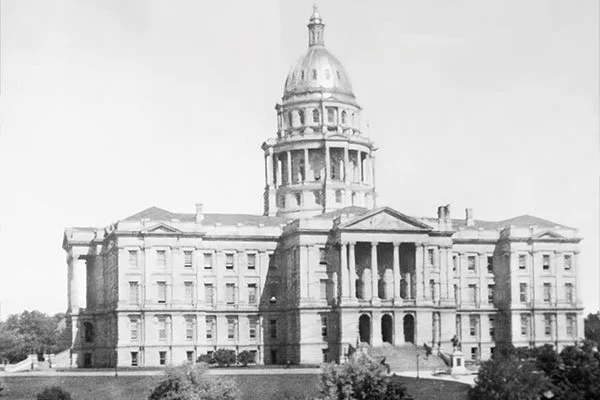
On January 1, 1876, Colorado achieved statehood. Under President Ulysses S Grant, the Union became more balanced, and the nation celebrated its Centennial by adding a new star to the flag, recognizing a place that had already proven it intended to stay.
In researching this piece and learning so much along the way, something occurred to me. Colorado has always been a place where people come to discover, and to become.
From trappers and fur traders, to those seeking fortune in the earth, to visionaries who saw what others could not, Colorado has been a gateway to what comes next.
I began by talking about my own arrival here as an adventure of the heart. In that, I found a small but meaningful connection. Coming to Colorado with little more than hope and a belief in beginning again is not new. It is a tradition that reaches back to the very start.
Improbable. Doubted. A leap taken without guarantees. That is how this state came to be.
And it is still becoming.
Happy 150th birthday, Colorado. Your beauty and allure are matched only by your resilient history, and your boundless potential.
Click here to read this month’s issue or explore the Senior Voice Archives!
