
For A Long, Long Time
By Mike Haskins
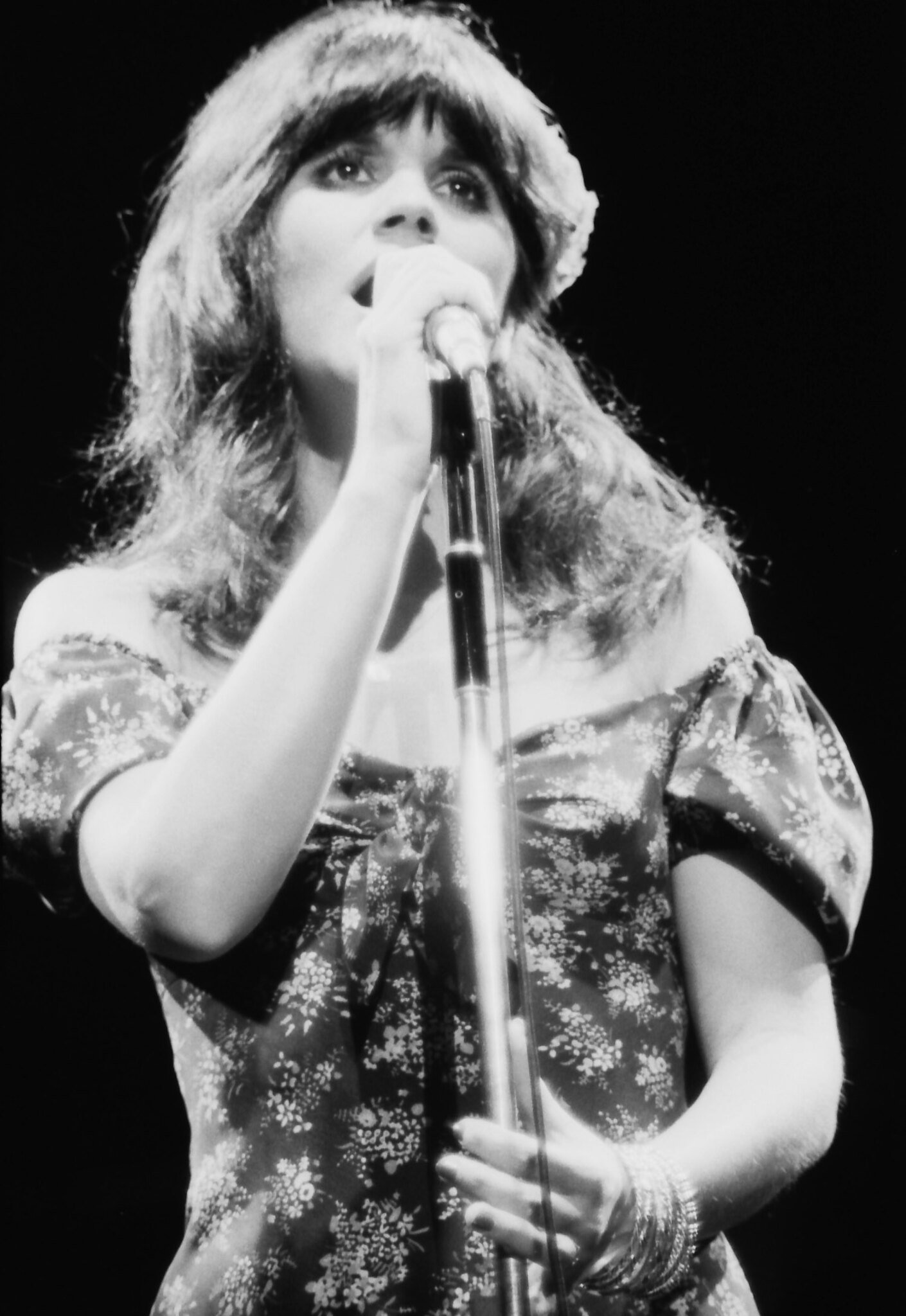
I was in love with Linda Ronstadt before I knew what that meant. It was the kind of love a boy doesn’t have to explain to himself, he just has it, the way you have weather. It took me years to understand what I was actually feeling. It’s taken me the rest of my life to understand why it never quite left.
If you grew up in the 1970s like I did, you probably heard the Willie Nelson line: “There are two types of men in this world: those who are in love with Linda Ronstadt and those who have never met her.” I was the first kind before I had a word for love at all.
Last month, this icon and musical force of nature turned 80, and something in me didn’t want to believe it. Linda Ronstadt, 80? Inconceivable. Ironically, my mother-in-law turned 80 the same month, and it’s hard to think of Linda as anyone’s mother-in-law.
She came to Los Angeles from Tucson in the mid-1960s, steeped in the Mexican folk music her father introduced her to at home. She wasn’t from a superstar background, she was from Arizona, from a language and a music most of the industry didn’t yet know how to hear. In a way, we started from the same place: off the map, unnoticed, waiting to matter to someone. She joined a group called the Stone Poneys, and in 1967 they had a surprise hit with “Different Drum,” written by little-known Michael Nesmith, later of The Monkees. The song cracked the top 20, and suddenly the business knew the name Linda Ronstadt, though critics talked less about the song than about that voice.
After the Stone Poneys broke up, she went solo. “Long Long Time” hit No. 25 in 1970 and earned her first Grammy nomination, but the industry still didn’t know what to do with her: rock, folk, pop? The song, she said, bought her time.
Then in 1974, everything changed. Heart Like A Wheel was a breakthrough, loaded with hits: “You’re No Good,” “When Will I Be Loved,” “It Doesn’t Matter Anymore.” I was 11 when it hit the radio, too young to know what I was hearing. I just knew I liked it. By 13, I remember riding in my uncle’s Duster, him about 30, the radio blaring “You’re No Good, you’re no good, baby, you’re no good.” He was singing along, and so was I. He looked over: “You like Linda Ronstadt?” I nodded, smiling. He glanced back, with a knowing look: “Yeah. You do.”
By the time I was 15, I knew what I was feeling. Like everyone else, I had a record collection, and the only female artist who circled my turntable was Linda. She was my first taste of something like sexual awakening, in a house where such things were never once spoken of, and I had no language for it beyond the songs.
But that’s not really why she lingers. What lingered, what I got hooked on underneath the obvious, was her independence. Her artistic choices. Her fearlessness. I wanted, without knowing how to say so at 15, to meet a woman built like that. I still do. They’re not easy to find. If I’m honest, some of what I felt watching her was less admiration than envy: I wished I had more of what she seemed to have without even trying.
Almost overnight, she went from respected singer to superstar. But her fame wasn’t built on beauty; it was built on what happened when the lights went down. She became one of the first female solo artists to headline and sell out arenas, at a time when few women got that chance, and the live show never undersold the record. She also encouraged two of her band members, Glenn Frey and Don Henley, to start a group of their own and helped them recruit the rest of the lineup. That band was the Eagles.
She wasn’t a songwriter, but she may have been the era’s greatest interpreter of songs: “Blue Bayou,” “Poor Poor Pitiful Me,” “Tracks of My Tears.” She’d take what was seen as a man’s song and stand it on its head. Few female artists have taken on a Rolling Stones song with the confidence she brought to “Tumbling Dice.” She was scared of nothing, least of all comparison.
If the story ended there, it would be enough. It isn’t close to over.
In 1980, at the height of her popularity, she walked away from rock, a move no one saw coming. I was a junior in high school, watching her wander off, and I couldn’t let her go. She was changing, and so was I.
With no acting experience, she took the Broadway lead in The Pirates of Penzance. They said she was crazy. The production won three Tonys, and she earned a Best Actress nomination of her own, proving them wrong.
Then, instead of the expected return to rock, she recorded the Great American Songbook with arranger Nelson Riddle: Gershwin, Porter, Berlin, Rodgers & Hart. Her own label thought she’d lost her mind. What’s New sold three million copies; two more platinum records followed. Before Linda, executives believed listeners under 40 had no interest in these songs. After her, the Songbook was commercially viable again, a path later walked by Rod Stewart, Michael Bublé, and Lady Gaga.
This is the part that hit me hardest, and still does. She was never boxed into a small space because she was a woman. She sang from a woman’s point of view but never once came off as weak. She taught me, long before I had the words for it, that strength and femininity weren’t opposites, that a woman could walk away from the top of the mountain simply because she wanted to see what was on the other side, and land on her feet every time.
In 1987 she joined Dolly Parton and Emmylou Harris as Trio, three voices that blended into one instead of competing for the spotlight, among the finest harmonies ever recorded in country music. It was one more genre she’d go on to conquer, folding country and Americana into everything else she’d already claimed.
Next came Canciones de Mi Padre, a Spanish-language love letter to her father and her Mexican heritage, following her heart over the current of popularity. It sold two million copies, at the time the biggest-selling Spanish-language album ever. That voice, commanding fifty thousand fans in an arena, or singing mariachi, was undeniable in its authenticity, and it knew no barrier.
Every time the industry thought it knew who she was, she became someone else, and audiences kept following. In all: over 100 million records sold, 11 Grammys, and a place in the Rock and Roll Hall of Fame, alongside honors from the Kennedy Center and the National Medal of Arts.
She stepped away from performing in 2009, later revealing a condition originally diagnosed as Parkinson’s was actually progressive supranuclear palsy. I never saw her in concert, a regret I still carry. I don’t think of her as tragic; she still shows up in documentaries, still sits for interviews, still has things to say even though she can no longer sing them. Her voice, in that sense, was never stilled at all.
She’s almost a generation older than me. When I was a teenager and she was in her 30s, I had an adolescent’s view of her: fixed, ageless, an adult in the way only a teenager can flatten someone into an adult. Hearing she was sick, my first reaction was almost fear. She wasn’t young anymore. We can accept that in our parents; it’s harder in those that seem timeless. But right behind it came the harder question. If she wasn’t young anymore, was I? And underneath that one, a harder one still: was I ever as young, as fearless, as unboxed as she was. Could I still make bold choices, and reinvent myself. That’s what mortality does when it touches someone who soundtracked your journey from the life you inherited to the life you could build. It doesn’t just ask what’s left of them. It asks what’s left of you.
I cannot be unaffected, even now, by the dark eyes and swept up hair of the young woman sitting at the vanity on the cover of Simple Dreams. It made me believe in the possibilities of life, beyond the small world I’d grown up in.
Happy 80th birthday, belatedly, Linda Ronstadt. You were never just a singer. You were the soundtrack to a generation discovering who it was becoming.
